Why Is My Child Refusing to Go to School?
Understanding School Refusal, Anxiety, and When Your Child May Need More Support
Getting out the door for school can be stressful in many families. A child may complain that they are tired, say they do not feel well, or simply announce, “I don’t want to go to school.”
An occasional difficult morning is not unusual.
But what happens when your child repeatedly refuses to go to school?
Maybe the stomachaches start every Sunday night. Your child seems fine until it is time to get dressed for school. There may be tears, arguments, panic, or repeated requests to stay home. Some children make it to school but regularly call home or visit the nurse asking to leave.
When this becomes a pattern, parents are often left wondering:
Is my child being defiant or is something else going on?
School refusal is often less about a child not wanting to go to school and more about something making school feel difficult, uncomfortable, or overwhelming.
Understanding what is behind the behavior is an important first step toward helping your child.
What Is School Refusal?
School refusal is not a diagnosis by itself. It is a term used to describe ongoing difficulty attending or remaining at school because of emotional distress.
It can look very different from one child to another.
Some children refuse to leave the house. Others get dressed and ready but become extremely upset when it is time to get into the car.
A child may attend school but frequently ask to go home, visit the school nurse, or complain of physical symptoms throughout the day.
Older children and teens may begin missing certain classes, arriving late, or finding other ways to avoid parts of the school day.
What parents see on the outside is the refusal.
The more important question is:
What is happening underneath it?
Why Is My Child Refusing School?
There is rarely one explanation that applies to every child.
School refusal can be connected to anxiety, social difficulties, academic stress, separation concerns, bullying, changes at home, or other emotional and behavioral challenges.
Sometimes the reason is obvious. Other times, even the child may have difficulty explaining why going to school feels so hard.
Anxiety
Anxiety is one of the most common issues associated with school avoidance.
A child may worry about:
- Making a mistake
- Getting a bad grade
- Being called on in class
- Taking a test
- Talking to other students
- Not knowing where to go
- Being embarrassed
- Something happening to a parent while they are away
- Being unable to leave if they become anxious
To an adult, some of these fears may seem unlikely.
To an anxious child, however, they can feel very real.
Separation Anxiety and School
For some children, the hardest part of school is being away from a parent or caregiver.
Younger children may cry, cling to a parent, or repeatedly ask whether the parent will come back.
Older children can experience separation anxiety too, although it may look different.
They may worry that something bad will happen at home while they are gone or become preoccupied with the safety of a parent or family member.
A child experiencing separation anxiety is not necessarily trying to manipulate the situation.
Their distress may be genuine, even when the parent knows they are safe.
Physical Symptoms Before School
One of the most confusing parts of school anxiety for parents is how physical it can become.
Children may experience:
- Stomachaches
- Headaches
- Nausea
- Dizziness
- Shakiness
- Rapid heartbeat
- Fatigue
- Difficulty sleeping
Sometimes a pattern becomes noticeable.
The child feels sick before school but improves after being allowed to stay home. They may feel completely fine during weekends, holidays, or school breaks.
That does not necessarily mean the child is “faking.”
Anxiety can produce very real physical sensations.
Medical concerns should always be appropriately evaluated, particularly when symptoms are new, persistent, or unexplained. But when physical complaints consistently occur around school, it is also worth considering whether anxiety or another emotional concern may be contributing.
Social Anxiety, Friendships, and Bullying
Sometimes the classroom itself is not the problem.
The social environment is.
Children and teens may avoid school because they are worried about friendships, rejection, bullying, lunch periods, group projects, sports, or simply feeling like they do not fit in.
For teenagers especially, social problems may not be immediately obvious to parents.
A teen may simply say:
“School is stupid.”
Or:
“I hate everyone there.”
Before assuming that a child is simply being difficult, it can help to become curious about what has changed.
Did a friendship end?
Was there an embarrassing situation?
Are they being excluded?
Is something happening online or through social media?
Sometimes school refusal is the first visible sign of a problem that has been developing quietly.
Academic Pressure and Perfectionism
Not every child who refuses school is struggling academically.
In fact, children who place very high expectations on themselves can also experience significant school anxiety.
A child who believes they must get everything right may become overwhelmed by:
- Tests
- Homework
- Presentations
- Grades
- Advanced classes
- Sports expectations
- College preparation
- Fear of disappointing parents or teachers
Perfectionism can sometimes look like motivation from the outside.
But when a child becomes so afraid of failing that they begin avoiding the situation altogether, anxiety may be playing a larger role.
Changes and Stress Outside of School
Children do not leave what is happening at home at the school door.
Divorce, separation, grief, illness, moving, family conflict, financial stress, or other significant changes can affect a child's ability to manage school.
Sometimes school refusal begins after a specific event.
Other times, several smaller stressors build until the child feels overwhelmed.
This is why looking at the whole child not just the school behavior is so important.
Is School Refusal the Same as Truancy?
Not necessarily.
Although both involve missing school, the reasons behind them can be very different.
A child experiencing school refusal is often distressed about attending school and may remain home with a parent's knowledge. They may actually want to be able to attend but feel unable to manage the anxiety or emotional discomfort associated with it.
That distinction matters.
Simply treating the behavior as defiance can miss what the child may actually be struggling with.
Should I Let My Child Stay Home Because of Anxiety?
This is one of the most difficult questions parents face.
When your child is crying, panicking, or saying they feel sick, allowing them to stay home can feel like the most compassionate response.
Sometimes staying home is appropriate, particularly when a child is physically ill or there is another legitimate reason they cannot attend.
However, when anxiety repeatedly leads to staying home, avoidance can begin reinforcing the anxiety.
The child learns:
“When I avoid school, the uncomfortable feeling goes away.”
That immediate relief can make going back the next day even harder.
The goal is not to force a distressed child through a situation without support.
It is to understand what is causing the distress and help the child gradually develop the skills and confidence needed to manage it.
What Can Parents Do About School Refusal?
Start by trying to understand the behavior rather than immediately focusing on stopping it.
Choose a calm time not during the morning rush to talk with your child.
Instead of asking only, “Why won't you go to school?” try more specific questions:
- What is the hardest part of the school day?
- When do you start feeling worried?
- Is there a class you are trying to avoid?
- How do you feel during lunch or recess?
- Is there someone at school making you uncomfortable?
- What do you worry might happen if you go?
- What would make school feel a little easier?
Children may not immediately have an answer.
That is okay.
The goal is to create space for them to begin talking about what they are experiencing.
It can also be helpful to communicate with teachers, guidance counselors, or other appropriate school staff. They may be noticing behaviors or patterns that are not visible at home.
When Should I Seek Help for School Refusal?
Parents do not need to wait until a child has stopped attending school completely.
Consider seeking professional support when:
- School refusal is becoming a pattern
- Morning anxiety is increasing
- Your child frequently complains of physical symptoms before school
- Your child is regularly leaving school early
- Anxiety is interfering with sleep
- Your child is experiencing panic symptoms
- Your child is withdrawing socially
- Grades or academic functioning are declining
- Your child is avoiding activities they previously enjoyed
- Family life is increasingly centered around getting your child to school
- You are unsure what is driving the behavior
Earlier intervention can be particularly important with school avoidance because patterns can become more difficult to change the longer they continue.
How Can Therapy Help With School Refusal?
Therapy begins with understanding why the child is struggling to attend school.
There is no single treatment plan that fits every child because school refusal can have many different causes.
Treatment may involve helping a child:
- Identify anxiety triggers
- Understand the connection between thoughts, feelings, physical sensations, and behaviors
- Develop coping and emotional regulation skills
- Challenge anxious or catastrophic thinking
- Build confidence in difficult situations
- Improve social or communication skills
- Address perfectionism or academic pressure
- Process grief, family changes, or other stressors
- Gradually reduce avoidance
Depending on the child's age and needs, parents may also be involved in treatment.
Collaboration with the school can sometimes be helpful as well, particularly when a child needs additional support transitioning back into consistent attendance.
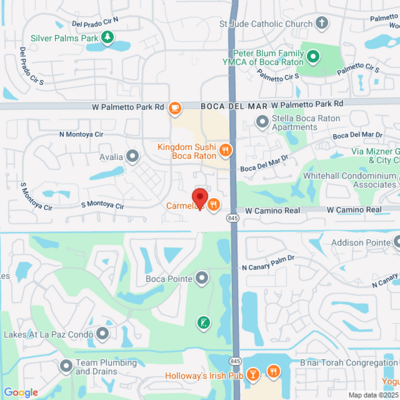
In-Person Therapy for School Anxiety in Boca Raton
For children and teens struggling with school refusal or significant anxiety, the therapeutic environment matters.
At ThriveSky Therapy, we offer in-person therapy in Boca Raton as well as telehealth throughout Florida when clinically appropriate.
We do not assume that telehealth is the best option simply because it is convenient.
Particularly with children and teens, we consider the child's age, developmental needs, presenting concerns, ability to engage, and individual circumstances when determining whether in-person or telehealth therapy is an appropriate fit.
Our goal is to create a therapeutic relationship where children and teens feel comfortable enough to begin understanding what is happening and develop practical skills they can use outside of the therapy room.
Your Child's Behavior Is Telling You Something
When a child repeatedly refuses school, it can quickly become frustrating for everyone.
Mornings become stressful. Parents worry about missed schoolwork and attendance. Children may feel misunderstood, embarrassed, or increasingly anxious.
It can be tempting to focus entirely on getting the child through the school doors.
But school refusal is often a signal.
Instead of asking only:
“How do I make my child go to school?”
It can be more helpful to ask:
“What is making school feel so difficult for my child right now?”
Once we understand what is underneath the behavior, we can begin helping the child move forward.
Child and Teen Therapy in Boca Raton, Florida
If your child or teen is struggling with school refusal, school avoidance, separation anxiety, social anxiety, academic stress, perfectionism, or back-to-school anxiety, ThriveSky Therapy can help.
Our therapists work with children, teens, young adults, adults, couples, and families in a warm, supportive environment.
ThriveSky Therapy offers in-person therapy in Boca Raton and telehealth throughout Florida when clinically appropriate.
We offer a free consultation to learn more about what your child is experiencing, answer questions, and determine whether our practice and approach may be a good fit.
My Child Seems Different Since School Started—When Should I Worry?