When your child is anxious, your instinct is usually to make them feel better.
You reassure them.
You tell them there's nothing to worry about.
You answer the same question again.
You let them avoid the situation that's upsetting them.
You step in and solve the problem.
You do these things because you're trying to help.
But anxiety can create a difficult parenting dilemma:
How do I support my child without accidentally teaching them that anxiety is something they can't handle?
There isn't a perfect response for every child or every situation. But understanding how anxiety works can help parents respond with both compassion and confidence.
The goal isn't to eliminate every uncomfortable feeling.
It's to help your child gradually learn:
“I can feel anxious—and I can still handle this.”
Should I Reassure My Child When They're Anxious?
Of course children need reassurance from their parents.
The issue isn't reassurance itself.
It's what happens when a child becomes dependent on repeated reassurance to feel safe.
Your child may ask:
“Are you sure I'll be okay?”
You answer yes.
Five minutes later:
“But are you really sure?”
You reassure them again.
For a moment, the anxiety decreases.
Then the worry returns.
This can create a cycle:
Worry → reassurance → temporary relief → worry returns → more reassurance.
Instead of repeatedly trying to prove that nothing bad will happen, begin helping your child build confidence in their ability to cope.
Rather than:
“I promise nothing bad will happen.”
try:
“I know you're worried. What could you do if something doesn't go exactly the way you hope?”
The message shifts from:
“You need certainty before you can feel okay.”
to:
“You can handle uncertainty.”
What Should I Say When My Child Is Anxious?
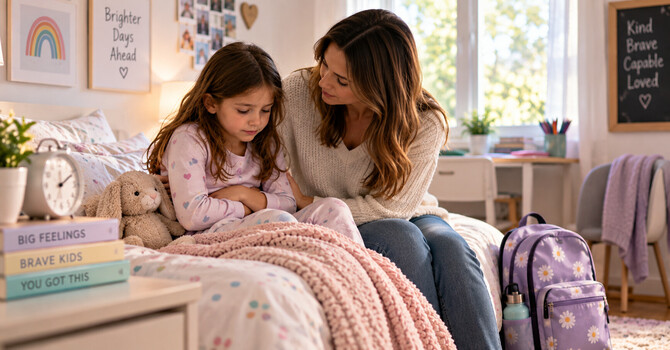
Start with validation.
Validation doesn't mean agreeing that the feared outcome is likely to happen.
It means recognizing your child's emotional experience.
Instead of:
“There's nothing to be nervous about.”
you might say:
“I can see that you're really nervous about this.”
Instead of:
“You're overthinking it.”
try:
“Your mind seems to be giving you a lot of worries right now.”
And instead of immediately solving the problem:
“What do you think might help you take the next step?”
This allows you to communicate two things at once:
“I understand that this is hard.”
and
“I believe you can handle hard things.”
That balance is powerful.
Should I Let My Child Avoid Things That Make Them Anxious?
Sometimes avoiding something is appropriate.
A child may genuinely need a break, additional preparation, support, or an adjustment to expectations.
But when anxiety repeatedly determines what a child can and cannot do, avoidance can become part of the anxiety cycle.
Imagine a child who becomes anxious before a birthday party.
They ask to stay home.
The parent agrees.
The child's anxiety immediately decreases.
Their brain learns:
“I felt better because I didn't go.”
The next social event may feel even harder.
This is one reason anxiety can gradually make a child's world smaller.
They stop attending parties.
Then sleepovers.
Then extracurricular activities.
Then situations where they don't know exactly what to expect.
The goal is not to force a highly distressed child into every feared situation.
Instead, children can often benefit from gradually approaching manageable challenges with appropriate support.
Confidence grows through experience.
What Is Parental Accommodation of Anxiety?
Parents sometimes change family routines or expectations in order to prevent a child's anxiety.
This is often called family or parental accommodation.
Examples might include:
- Speaking for a child because they are nervous
- Allowing repeated avoidance of school or activities
- Changing family plans because a child is anxious
- Providing excessive reassurance
- Completing tasks the child is capable of doing
- Participating in anxiety-driven rituals
- Removing every situation that creates discomfort
Accommodation usually comes from compassion.
Parents see their child struggling and naturally want to reduce the distress.
And in the short term, it often works.
The child feels better.
The challenge is that repeated accommodation can sometimes communicate:
“You need me to change the situation because you can't handle this feeling.”
A more confidence-building message is:
“I'm here to support you while you learn that you can do difficult things.”
This isn't about suddenly removing every support.
It's about gradually helping children do more of what anxiety has convinced them they cannot do.
How Can I Help My Child Face Anxiety Without Pushing Too Hard?
Think in small steps, not giant leaps.
If a child is afraid of speaking in front of others, the first step doesn't necessarily need to be standing in front of an entire classroom.
They might begin by practicing in front of a parent.
Then another family member.
Then a friend.
Then a small group.
Gradual success teaches the brain something important:
“I was anxious, I did it anyway, and I got through it.”
Parents can praise courage and effort rather than whether the child appeared completely calm.
Try:
“I know you were nervous, and you still took the first step.”
The goal isn't:
“I wasn't anxious.”
The goal becomes:
“I can do things even when I feel anxious.”
Should I Teach My Child Coping Skills?
Yes—but coping skills work best when children practice them before they're overwhelmed.
Depending on your child's age, helpful strategies may include:
- Slow breathing
- Grounding exercises
- Identifying and naming emotions
- Positive coping statements
- Movement or physical activity
- Journaling
- Mindfulness
- Breaking overwhelming tasks into smaller steps
- Developing predictable routines
- Problem-solving
But coping skills shouldn't become another requirement that makes a child believe:
“I have to get rid of my anxiety before I can do something.”
Sometimes the skill is simply learning that anxiety can be present without being in charge.
How Can I Help an Anxious Child Before School?
School anxiety can be particularly difficult because parents often have to make decisions quickly in the morning.
A predictable routine can help reduce unnecessary stress.
Prepare what you can the night before. Maintain consistent sleep and wake times. Keep morning conversations calm and brief when anxiety is already high.
If your child frequently reports stomachaches, headaches, or feeling sick before school, take those symptoms seriously.
Physical symptoms can be associated with anxiety, but they shouldn't automatically be assumed to be psychological. Persistent, new, severe, or concerning symptoms should be discussed with your child's medical provider as appropriate.
When anxiety is contributing to school avoidance, repeatedly staying home can sometimes make returning more difficult.
If school anxiety is becoming frequent or significantly affecting attendance, it may be time to involve appropriate school, medical, and/or mental health supports rather than trying to manage the pattern alone.
What If My Teenager's Anxiety Is About Grades?
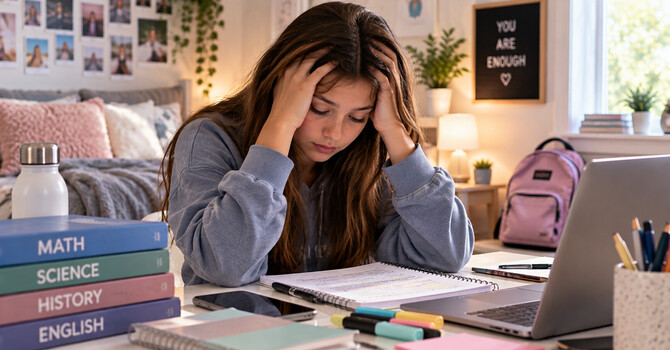
For teenagers, anxiety may look less like avoidance and more like overachievement.
A teen may study excessively, stay up too late completing assignments, repeatedly check grades, become devastated by small mistakes, or believe that anything less than an A represents failure.
Parents can help by broadening the definition of success.
Notice effort.
Notice persistence.
Notice asking for help.
Notice flexibility.
Notice when your teenager chooses sleep over another unnecessary hour of studying.
Achievement can be important without becoming the measure of a teenager's worth.
A helpful question isn't only:
“How are their grades?”
It's also:
“How is my teenager doing while earning those grades?”
What Should Parents Avoid Saying to an Anxious Child?
Parents don't need a perfect script.
But some common responses can unintentionally leave children feeling misunderstood.
Statements such as:
“Just stop worrying.”
“You're being dramatic.”
“There's nothing to be afraid of.”
“Everyone else can do it.”
may increase shame without reducing anxiety.
Try communicating understanding and confidence instead:
“I know this feels difficult.”
“Let's figure out the next manageable step.”
“You don't have to feel completely calm before you try.”
“I'm here, and I believe you can work through this.”
Your child doesn't need you to convince them that life will always feel comfortable.
They need help learning that they can cope when it doesn't.
When Is It Time to Get Professional Help for My Child's Anxiety?
You don't have to wait until anxiety becomes a crisis.
Consider talking with a mental health professional when anxiety is persistent, increasing, or beginning to interfere with your child's:
- School attendance or performance
- Sleep
- Friendships
- Family relationships
- Activities
- Independence
- Physical well-being
- Ability to manage everyday situations
You may also notice that your family is increasingly organizing routines, activities, or decisions around preventing your child's anxiety.
That can be another indication that additional support may be helpful.
Therapy can help children understand anxiety, recognize how thoughts and physical sensations interact, develop coping and emotional regulation skills, reduce avoidance, and gradually build confidence facing difficult situations.
Parents can also learn strategies for responding to anxiety in ways that support both connection and independence.
Child & Teen Anxiety Therapy in Boca Raton, Florida
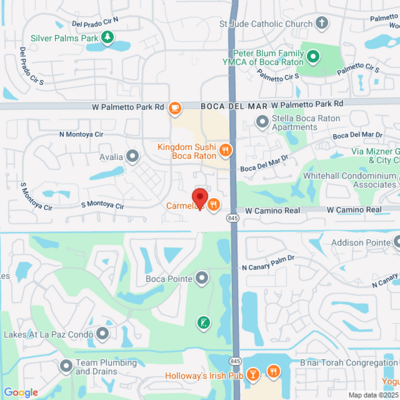
At ThriveSky Therapy, we provide in-person therapy for children and teenagers in Boca Raton, Florida, with telehealth options available throughout Florida when clinically appropriate.
Our therapists work with children, teens, and families experiencing anxiety, school stress, perfectionism, emotional regulation difficulties, avoidance, self-esteem concerns, family challenges, and other emotional or behavioral concerns.
For younger children, therapy may include play, creative activities, games, emotional identification, and developmentally appropriate coping strategies.
For teenagers, therapy may focus on anxiety, academic pressure, perfectionism, relationships, emotional regulation, communication, identity, and the challenges that come with increasing independence.
Parents are an important part of the process.
Helping a child with anxiety often means helping the adults around them understand when to comfort, when to encourage, when to step in, and when to allow the child to discover:
“I can do this.”
Because every child and family is different, we also believe therapist fit matters.
A free consultation with ThriveSky Therapy can help you talk through what you're seeing, ask questions, and determine whether therapy may be appropriate and which therapist may be the best fit for your child or teenager.
Closing Our Anxiety in Children & Teens Series
Throughout this series, we've looked at anxiety from several different angles.
We began with:
How Do I Know If My Child Has Anxiety?
Then we explored a symptom parents may not immediately connect with emotions:
Why Does My Child Have Stomachaches Before School?
We looked at how anxiety can change during adolescence:
Why Is My Teenager So Stressed About Grades?
And now we've arrived at the question that often matters most to parents:
What can I actually do to help?
There isn't one perfect parenting response that prevents a child from ever becoming anxious.
Nor should that be the goal.
Children will experience uncertainty, disappointment, mistakes, social challenges, academic pressure, transitions, and situations they cannot control.
What we can help them develop is the ability to move through those experiences.
Sometimes your child needs comfort.
Sometimes they need encouragement.
Sometimes they need you beside them while they take a difficult step.
And sometimes the most supportive thing you can communicate is:
“I know this is hard. I'm here. And I believe you can handle it.”
At ThriveSky Therapy, we believe children and families don't have to wait until anxiety has taken over everyday life before reaching out for support.
Sometimes the first conversation simply begins with:
“We're not sure if we're helping in the right way.”
That's a perfectly good place to start.