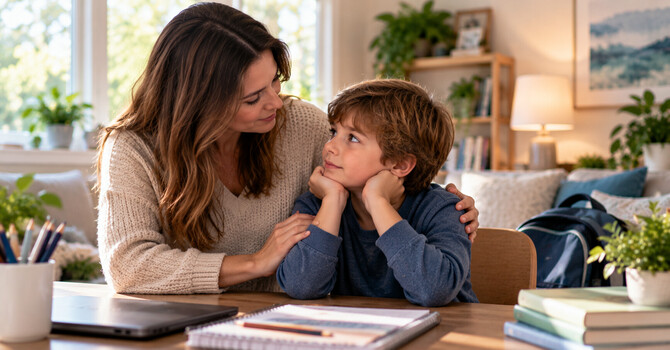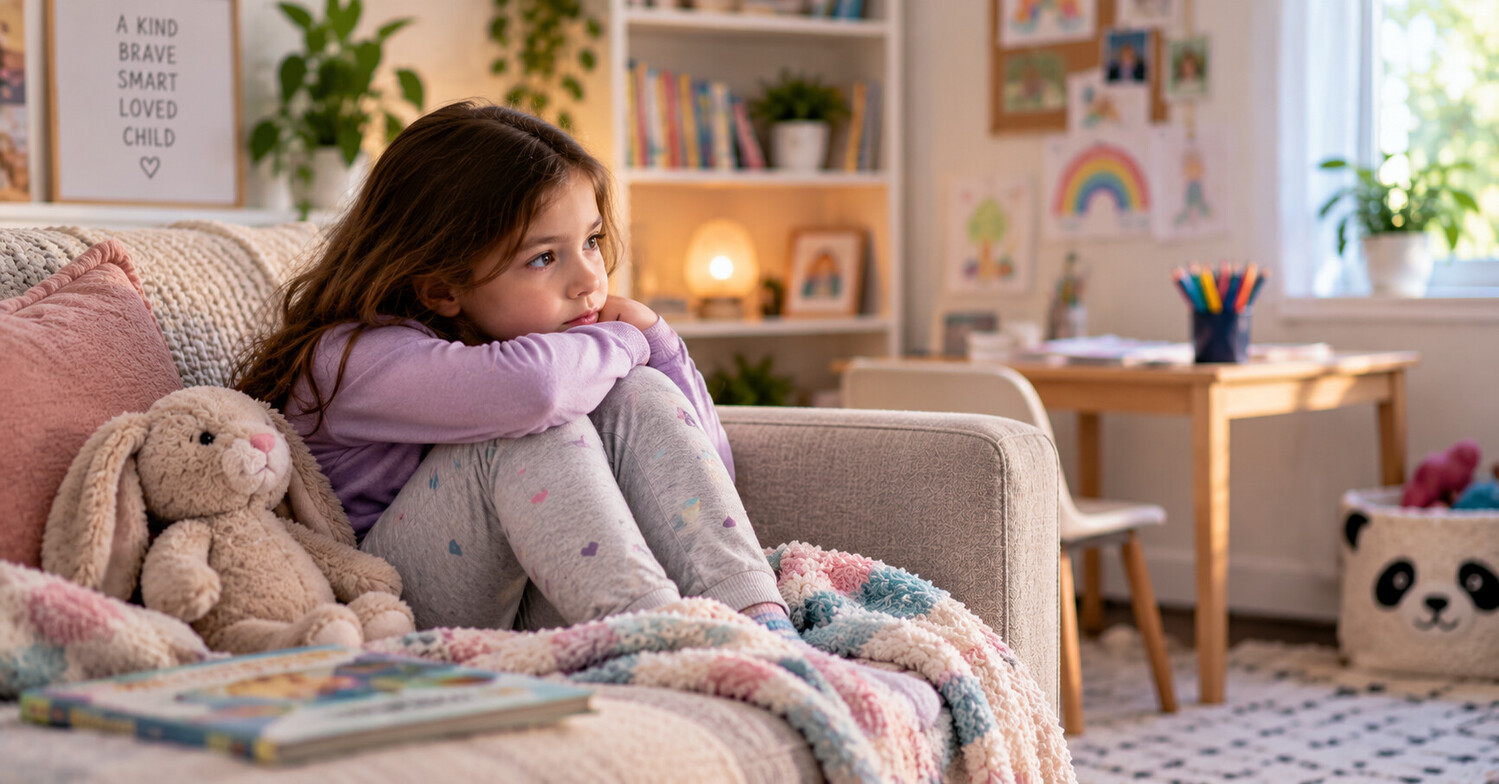
Every child worries sometimes.
They may feel nervous before the first day of school, worry about an upcoming test, hesitate before trying something new, or want extra reassurance when something feels unfamiliar.
Those feelings are a normal part of childhood.
But what happens when the worry doesn't seem to go away?
Maybe your child asks the same questions repeatedly. They suddenly don't want to go to school. Bedtime has become difficult. They complain that their stomach hurts. They become upset when plans change—or seem unusually angry or irritable over small things.
Parents often expect anxiety in children to look like fear.
It doesn't always.
Childhood anxiety can show up through behavior, physical complaints, avoidance, perfectionism, irritability, sleep difficulties, or a constant need for reassurance.
Understanding what anxiety can look like is often the first step in recognizing when a child may need additional support.
What Does Anxiety Look Like in Children?
Anxiety can look different from one child to another.
Some children openly tell their parents what they're worried about.
Others may not have the words—or even fully understand what they're feeling.
Instead, parents may notice changes in behavior.
Signs of anxiety in children can include:
- Frequent worrying or asking “what if” questions
- Repeatedly seeking reassurance
- Difficulty separating from parents
- Avoiding school, activities, or social situations
- Becoming very upset about making mistakes
- Perfectionism
- Irritability or emotional outbursts
- Difficulty falling or staying asleep
- Trouble concentrating
- Increased clinginess
- Frequent stomachaches or headaches
- Fear of trying unfamiliar things
- Becoming distressed when routines or plans change
- Avoiding situations that previously seemed manageable
One of these behaviors by itself doesn't necessarily mean your child has an anxiety disorder.
What matters is the pattern, frequency, intensity, and impact on your child's everyday life.
Can Anxiety Look Like Anger in Children?
Yes—and this is something parents may easily miss.
A child who feels anxious doesn't always appear scared.
They may become frustrated, argumentative, oppositional, tearful, or angry when faced with something that feels overwhelming.
Imagine a child who is anxious about going to school.
They may not say:
“I'm worried that I'll make a mistake in class and everyone will notice.”
Instead, the morning may look like refusing to get dressed, arguing about breakfast, yelling at a sibling, or becoming upset when it's time to leave.
The behavior you see may be anger.
The emotion underneath it may be anxiety.
This doesn't mean every angry outburst is caused by anxiety, and it doesn't mean parents should ignore inappropriate behavior.
It means that sometimes asking “What might be underneath this behavior?” gives us more useful information than focusing only on stopping the behavior itself.
Why Does My Child Keep Asking Me the Same Questions?
Reassurance-seeking is another way anxiety can show up.
Your child might repeatedly ask:
“Are you sure you're picking me up?”
“What if I fail the test?”
“Are you sure I'm not sick?”
“What if something happens to you?”
“Do you think everyone is mad at me?”
Parents naturally want to reassure their children.
And reassurance can certainly be comforting.
But with anxiety, reassurance sometimes provides only temporary relief. The worry returns, the child asks again, and the cycle repeats.
Over time, the goal isn't simply to convince a child that nothing bad will ever happen.
It's to help them gradually develop confidence that they can tolerate uncertainty and cope with uncomfortable feelings.
Can Perfectionism Be a Sign of Childhood Anxiety?
Sometimes.
A child who appears extremely motivated or conscientious may actually be experiencing significant worry about making mistakes, disappointing others, or not doing something “right.”
You may notice that your child:
- Becomes extremely upset over small mistakes
- Avoids trying something unless they believe they'll succeed
- Takes an unusually long time completing assignments
- Repeatedly checks their work
- Needs frequent reassurance that something is “good enough”
- Has difficulty handling criticism or correction
Because these children may be doing well academically or behaviorally, their anxiety can be easier to overlook.
A child can be functioning well on the outside while feeling overwhelmed on the inside.
Why Does My Child Avoid Things That Make Them Anxious?
Avoidance makes sense.
If something makes us uncomfortable, moving away from it usually makes us feel better.
A child who feels anxious about a birthday party may ask not to go.
A child worried about giving a presentation may suddenly feel unable to attend school.
A child who fears making mistakes may refuse to try a new activity.
When the child avoids the situation, anxiety decreases.
For the moment.
The problem is that repeated avoidance can teach the child:
“I felt better because I escaped it.”
That can make the feared situation feel even harder the next time.
Helping children with anxiety often involves supporting them in gradually building confidence and learning that they can experience uncomfortable feelings without always needing to escape them.
That process should be appropriate for the child's age, individual needs, and level of distress—not simply forcing a frightened child into a situation.
Can Anxiety Cause Physical Symptoms in Children?
Yes.
Children can experience anxiety physically.
Parents may notice:
- Stomachaches
- Headaches
- Nausea
- Muscle tension
- Feeling shaky
- A racing heart
- Difficulty sleeping
- Fatigue
For some children, the physical symptom is the first thing they notice.
They may genuinely feel sick without realizing that stress or anxiety could be contributing to what their body is experiencing.
Physical symptoms should not automatically be assumed to be anxiety. New, persistent, severe, or concerning symptoms should be discussed with your child's medical provider as appropriate.
But when physical complaints repeatedly appear around particular situations—such as school mornings, tests, social events, separation, or unfamiliar activities—it may be worth considering whether anxiety is part of the picture.
Is My Child's Anxiety Normal or Should I Be Concerned?
Some anxiety is normal and even helpful.
Anxiety can alert us to danger, encourage preparation, and help children approach important situations carefully.
The question isn't:
“Does my child ever feel anxious?”
A more helpful question is:
“Is anxiety beginning to interfere with my child's life?”
Consider whether anxiety is affecting:
- School attendance or performance
- Friendships
- Family relationships
- Sleep
- Activities
- Independence
- Willingness to try new things
- Everyday routines
Also consider whether your child's world seems to be getting smaller because of anxiety.
Are there more things they won't do?
More situations they avoid?
More reassurance they need before they can move forward?
Those patterns can be important.
What Can Parents Do to Help a Child With Anxiety?
Start by listening.
Instead of immediately saying:
“There's nothing to worry about.”
you might try:
“I can see that this feels really hard for you.”
Validation doesn't mean agreeing that the feared outcome will happen.
It communicates:
“I understand that this feeling is real for you.”
Parents can also help children name emotions, practice coping strategies, maintain predictable routines, and gradually build confidence facing manageable challenges.
One of the hardest parts for parents is knowing when helping becomes too much helping.
When a child is anxious, it's natural to want to remove whatever is making them uncomfortable.
Sometimes that's appropriate.
Other times, repeatedly changing plans, providing constant reassurance, or allowing anxiety to determine what a child can and cannot do may unintentionally strengthen avoidance.
Finding the balance between supporting your child and helping your child build confidence is important.
When Should I Consider Therapy for My Child's Anxiety?
You don't need to wait until anxiety becomes severe.
Therapy may be helpful when worry, avoidance, physical symptoms, reassurance-seeking, or emotional reactions are persistent or beginning to interfere with your child's everyday life.
Child therapy can help children learn to:
- Recognize and name emotions
- Understand how anxiety affects their thoughts and bodies
- Develop coping and emotional regulation skills
- Increase confidence
- Communicate worries more effectively
- Gradually face situations they have been avoiding
Parents are also an important part of the process.
At ThriveSky Therapy, we believe helping a child often includes helping parents better understand what is driving the behavior and how they can support new skills outside the therapy room.
Child Anxiety Therapy in Boca Raton, Florida
ThriveSky Therapy provides in-person therapy for children and teens in Boca Raton, Florida, with telehealth options available throughout Florida when clinically appropriate.
Our therapists work with children and families experiencing anxiety, school stress, emotional regulation difficulties, behavioral concerns, family transitions, self-esteem concerns, and other emotional challenges.
For younger children especially, therapy doesn't have to mean sitting across from a therapist and talking about worries for an hour.
Depending on the child's age and individual needs, therapy may incorporate play, creative activities, games, emotional identification, coping strategies, and developmentally appropriate approaches that help children express themselves and build skills.
We also recognize that therapist fit matters.
A free consultation with ThriveSky Therapy can help parents talk through what they're noticing and determine whether therapy may be appropriate and which therapist may be a good fit for their child and family.
Sometimes Anxiety Shows Up in the Body First
A child doesn't always walk into the kitchen before school and say:
“I'm feeling anxious.”
They may say:
“My stomach hurts.”
And when it happens repeatedly—especially before school—parents can find themselves wondering whether their child is sick, trying to avoid school, experiencing anxiety, or some combination of these things.
The stomachache is real.
The question is what may be contributing to it.
Understanding the connection between emotions and physical symptoms can help parents respond with compassion while still taking both their child's physical and emotional health seriously.
Next in our Anxiety in Children & Teens Series: Why Does My Child Have Stomachaches Before School?