How Do I Know If I Have an Anxiety Disorder?
Feeling anxious doesn't necessarily mean you have an anxiety disorder.
Anxiety is a normal human emotion. We may feel anxious before an important meeting, during a major life transition, when we're worried about our children, while dealing with relationship problems, or when life simply feels overwhelming.
The question I often help clients answer isn't, "Do I ever feel anxious?"
It's:
"Is anxiety beginning to interfere with my ability to live my life?"
After more than 25 years of working with individuals and families, I've seen anxiety show up in many different ways. Some people immediately recognize that they're anxious. Others come to therapy because they can't sleep, can't stop thinking, feel constantly overwhelmed, are increasingly irritable, or simply don't feel like themselves.
Understanding the signs of an anxiety disorder can help you recognize when everyday worry may have become something that deserves additional support.
What Does Anxiety Actually Feel Like?
Anxiety doesn't look the same for everyone.
Some people experience anxiety primarily through their thoughts. Their mind rarely seems to turn off.
Others feel it physically.
And many people experience both.
Common anxiety symptoms can include:
- Excessive worrying
- Overthinking situations or conversations
- Difficulty controlling worry
- Feeling restless or unable to relax
- Irritability
- Difficulty concentrating
- Trouble falling or staying asleep
- Feeling constantly "on edge"
- Muscle tension
- Racing heart
- Chest tightness
- Stomach discomfort
- Feeling overwhelmed
- Avoiding situations that create anxiety
- Repeatedly seeking reassurance
- Expecting something bad to happen even when there isn't an immediate threat
One thing I've learned throughout my years in practice is that people don't always walk into therapy saying, "I have anxiety."
They may say:
"I can't shut my brain off."
"I think about everything that could go wrong."
"I can't sleep because my mind starts racing."
"Everyone tells me I'm overthinking."
Or simply:
"I don't feel like myself anymore."
Those statements can tell us a great deal.
What's the Difference Between Normal Anxiety and an Anxiety Disorder?
Everyone experiences anxiety.
What we want to understand is the frequency, intensity, duration, and impact of that anxiety.
Occasional worry about finances, relationships, parenting, work, health, or school is part of life.
An anxiety disorder is different.
Anxiety becomes more concerning when it is persistent, difficult to control, disproportionate to the situation, or begins interfering with your ability to function.
Ask Yourself How Much Anxiety Is Affecting Your Life
Consider whether anxiety is affecting your:
- Sleep
- Appetite
- Work or school performance
- Relationships
- Parenting
- Social life
- Ability to concentrate
- Physical well-being
- Ability to relax
- Willingness to try new things
- Ability to make decisions
- Overall quality of life
Sometimes people become so accustomed to living with anxiety that they don't realize how much energy they're spending managing it.
You can be functioning and still be struggling.
Anxiety Doesn't Always Look Like Panic
This is an important distinction.
Many people assume they can't have an anxiety disorder because they don't experience panic attacks.
Anxiety can be much quieter.
It can look like lying awake at night replaying a conversation.
It can be checking something repeatedly because you're afraid you made a mistake.
It can be avoiding difficult conversations because you're worried about someone's reaction.
It can be needing constant reassurance.
It can be becoming irritable with the people you love because your nervous system already feels overwhelmed.
It can even look like being extremely organized, prepared, responsible, or productive because you're constantly trying to prevent something from going wrong.
That's why we have to look beyond the stereotypical picture of anxiety.
"But I've Always Been a Worrier"
I hear versions of this frequently.
People sometimes believe that because they've been anxious for years, it's simply part of their personality.
It may be how you've learned to function, but that doesn't necessarily mean you have to continue feeling that way.
Therapy gives us an opportunity to slow things down and look at the patterns underneath the anxiety.
What are you afraid might happen?
What thoughts keep repeating?
What situations trigger your anxiety?
What are you doing to try to make the anxiety go away?
And are those strategies actually helping or are they unintentionally keeping the cycle going?
Understanding those patterns is often an important part of anxiety treatment.
Anxiety Can Show Up Differently in Children and Teenagers
Adults aren't the only ones who experience anxiety.
Children and teenagers may not have the words to say, "I'm anxious."
Instead, parents may notice behavioral or physical changes.
Anxiety in children and teens can sometimes appear as:
- Irritability
- Frequent stomachaches or headaches
- Difficulty sleeping
- School avoidance
- Separation difficulties
- Perfectionism
- Excessive reassurance seeking
- Emotional outbursts
- Avoiding social situations
- Fear of making mistakes
- Changes in eating
- Declining school performance
- Withdrawal or isolation
This is one reason I encourage parents to pay attention when they feel that their child or teenager simply doesn't seem like themselves.
Behavior is often communication.
Rather than immediately asking, "How do we stop this behavior?" we may need to ask, "What is this behavior trying to tell us?"
You Don't Need to Diagnose Yourself Before Starting Therapy
One misconception I'd like to change is the idea that you need to know exactly what's wrong before contacting a therapist.
You don't.
You don't need to walk into therapy saying, "I have generalized anxiety disorder."
You can walk in saying:
"Something doesn't feel right."
"I'm worrying all the time."
"I'm overwhelmed."
"I don't know if what I'm experiencing is anxiety."
That's enough to begin the conversation.
Part of our job as mental health professionals is to help you understand what you're experiencing.
How Therapy Can Help With Anxiety
Therapy isn't about eliminating every anxious thought or making sure you never feel uncomfortable again.
That's neither realistic nor necessary.
Instead, anxiety therapy can help you understand your patterns and develop healthier ways of responding to anxious thoughts, emotions, and physical sensations.
Depending on the individual, therapy may help you:
- Identify anxiety triggers
- Recognize unhelpful thinking patterns
- Challenge catastrophic thinking
- Develop healthier coping strategies
- Improve emotional regulation
- Reduce avoidance
- Learn grounding and relaxation strategies
- Establish healthier boundaries
- Improve communication
- Increase tolerance for uncertainty
- Develop greater confidence in your ability to handle difficult situations
Different people need different approaches. Therapy should be individualized rather than forcing every person into the same treatment plan.
When Should I Seek Therapy for Anxiety?
You don't have to wait until anxiety becomes unbearable.
Consider reaching out when anxiety is:
- Affecting your daily functioning
- Interfering with sleep
- Creating problems in your relationships
- Affecting work or school
- Causing you to avoid important activities
- Becoming increasingly difficult to control
- Creating significant physical symptoms
- Leading you to rely on unhealthy coping strategies
- Preventing you from enjoying your life
You can also seek therapy simply because you're tired of feeling this way.
There doesn't have to be a crisis.
In my experience, addressing anxiety earlier often gives us an opportunity to understand and interrupt patterns before they become even more disruptive.
What I Want People to Understand About Anxiety
Anxiety often convinces us that we need certainty before we can feel okay.
We want to know that our children will be okay, our relationship will work out, our job is secure, our health is fine, or the decision we're making is the "right" one.
Life rarely gives us that kind of certainty.
An important part of anxiety treatment is learning that you can experience uncertainty without allowing fear to make every decision for you.
The goal isn't to "fix" you.
The goal is to help you understand what's happening, develop effective coping skills, and feel more capable of navigating the situations that trigger anxiety.
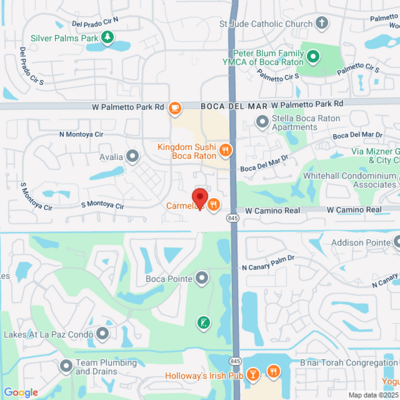
Looking for Anxiety Therapy in Boca Raton or Florida?
If you've been wondering, "Do I have an anxiety disorder?" you don't have to answer that question by yourself.
At ThriveSky Therapy, we work with children, teenagers, young adults, adults, couples, and families experiencing anxiety and related concerns. We can help you better understand what you're experiencing and determine the next appropriate step.
We offer in-person therapy in Boca Raton as well as telehealth options throughout Florida.
Sometimes the first step isn't knowing exactly what's wrong.
It's simply recognizing that you don't want to keep feeling the way you've been feeling and deciding to talk with someone about it.
Please see our complete list of therpists on our team and ready to help!